Friday, January 21, 2011

The Two Questions: Tango Jazz Edition


Since the earliest days when Jelly Roll Morton combined jazz with what he called the "Latin tinge," there has been the incorporation of elements from the music of other cultures. One of the latest and most innovative performers to carry on this tradition is Argentine born bassist and producer, Pablo Aslan. While maintaining the elegance and melancholy of traditional tango, he has brought it into the 21st Century by combining it with contemporary jazz improvisation. Pablo has performed and recorded with a long list of other performers and groups from Argentina and the U.S. Among them are Adrian Iaies, Paquito D’Rivera, Marco Granados, the Afro Latin Jazz Orchestra, Yo Yo Ma, Wynton Marsalis, Shakira, Joe Lovano, Gary Burton, Lalo Schifrin, and the New World Symphony. Pablo has also been involved in many prestigious musical projects such as The Tango Group with composer/pianist Roger Davidson, the New York Buenos Aires Connection and New York Tango Trio with bandoneonist Raul Jaurena, and as featured artist of the Lincoln Center Institute.

Furthermore, Pablo Aslan has done numerous recordings, and his latest release on Zoho Music, "Tango Grill," has been nominated for a Grammy in Latin Jazz.

I was very glad when Pablo agreed to answer my questions. The second has been tweaked to reflect his unique musical vision.


1. Why did you decide on a career in music?

Love of Music made me decide! Besides having a visceral attraction to music since I was a little kid, I discovered as a teenager that I had a certain facility for playing music, particularly the bass. I did not grow up in a musical household, and music education in high school was a joke. I took lessons wherever I could, but had my eye on an education in the US. So the big decision in my life was to leave Argentina as an 18 year old and come to the US. I first came to California to study (UCSC, Cal Arts, UCLA), and after 10 years moved to NY to go into it deeper. Early on in California I started playing gigs (jazz, symphony, latin jazz, tango), and over the years I’ve made my living primarily as a musician. I love the lifestyle, the work, the co-workers. I’ve also worked a bit as a producer, both for live shows and in the studio, and in several aspects of the music business. Music has taken me around the world and introduced me to so many aspects of life and so many great people that my life is richer because of my career choice.


2. What inspired you to blend jazz and tango?

My parent’s record collection had a bit of Beatles, Bossa Nova, Piazzolla , jazz, and classical music, so that’s how I started forming my aesthetic. In my teen years I started buying progressive rock and jazz records (particularly ECM, but also Mingus, Coltrane, etc.), and when I moved to the US, I got into tango (beyond Piazzolla), while I completed my studies in classical music. At some point I became interested in searching for a mode of expression that resonated completely with who I am and what I love about music. In a more general sense, it was a search for identity as an Argentine-American. As much as I loved playing jazz and classical music, I did not see myself being 100% immersed in them as a career. Tango struck me like a lightning bolt and brought it all together, and gave me a creative place to go towards. A deciding moment was to hear bassist Charlie Haden play duets wtih bandoneonist Dino Saluzzi. I felt like the answer to my search was right in front of me. That was in 1986. I’ve been on that path ever since, and I feel fortunate after so many years to have been able to unlock a few doors in what now is generally called Tango Jazz.


To see videos of Pablo in performance, here's a link to his You Tube channel: http://www.youtube.com/user/AvantangoMedia.

To get more information about him than can be included in this short post, go to Pablo's site at www.pabloaslan.com.




Saturday, January 15, 2011

The Two Questions Redux


My latest blogpost subject is the only jazz artist I personally know who has played with Blood Sweat & Tears. His name is Tom Guarna, and he is an extraordinary guitarist who has been sideman with a long list of bands and individual jazz greats including the Yellowjackets, Randy Brecker, Lenny White, Bob Dorough, Buddy DeFranco, Javon Jackson, Les McCann, Joe Locke, the Mingus Orchestra, and Billy Drummond. He has gigged very recently with pianists George Colligan and Kerry Politzer. Tom has led his own groups in clubs such as the Blue Note, Sweet Rhythm, Fat Cat and Smalls. Furthermore, he holds an undergraduate degree from The New School and a Masters Degree from The Juilliard School.

Tom Guarna enthusiastically agreed to answer the familiar two questions. Those answers now follow.


1. Why did you decide on a career in music?

Well, a career in music really decided on me. My father played guitar and would have people over the house to play. He would also take me to band rehearsals. There was a lot of music happening around the house, so when I really developed a serious interest in music in my late teens, it was a natural progression.


2. What is it you love about jazz that made you decide to focus on that type of music?

I grew up listening to classic rock, funk and R and B. Then I got into the classic Jazz Rock groups like Return To Forever and Weather Report and Tony Williams Lifetime. Once I started to research all the artists that these band members worked with, I discovered Miles and Coltrane and I was hooked. I just kept working back from there listening to Bird, Monk, Bud Powell, Ellington, Mingus, etc. I have always loved to improvise. Even when I was playing in rock and funk bands I would always rather play improvised solos rather than play the solos on the recordings. The tunes and wide harmonic palette that jazz offered was something that drew me in as well.


If you'd like to experience Tom Guarna live, he has an upcoming gig with the John Benitez Group. It's happening Monday, January 24th, at the 55 Bar, from 9:30 p.m. to 12:30 a.m.

The next best thing would be to check out a You Tube video of him at Fat Cat, performing his original composition, "Shambleau". You can see it by clicking here.

For further information about Tom and his music, go to his website, www.tomguarna.com .

Sunday, December 5, 2010

Greg Lewis


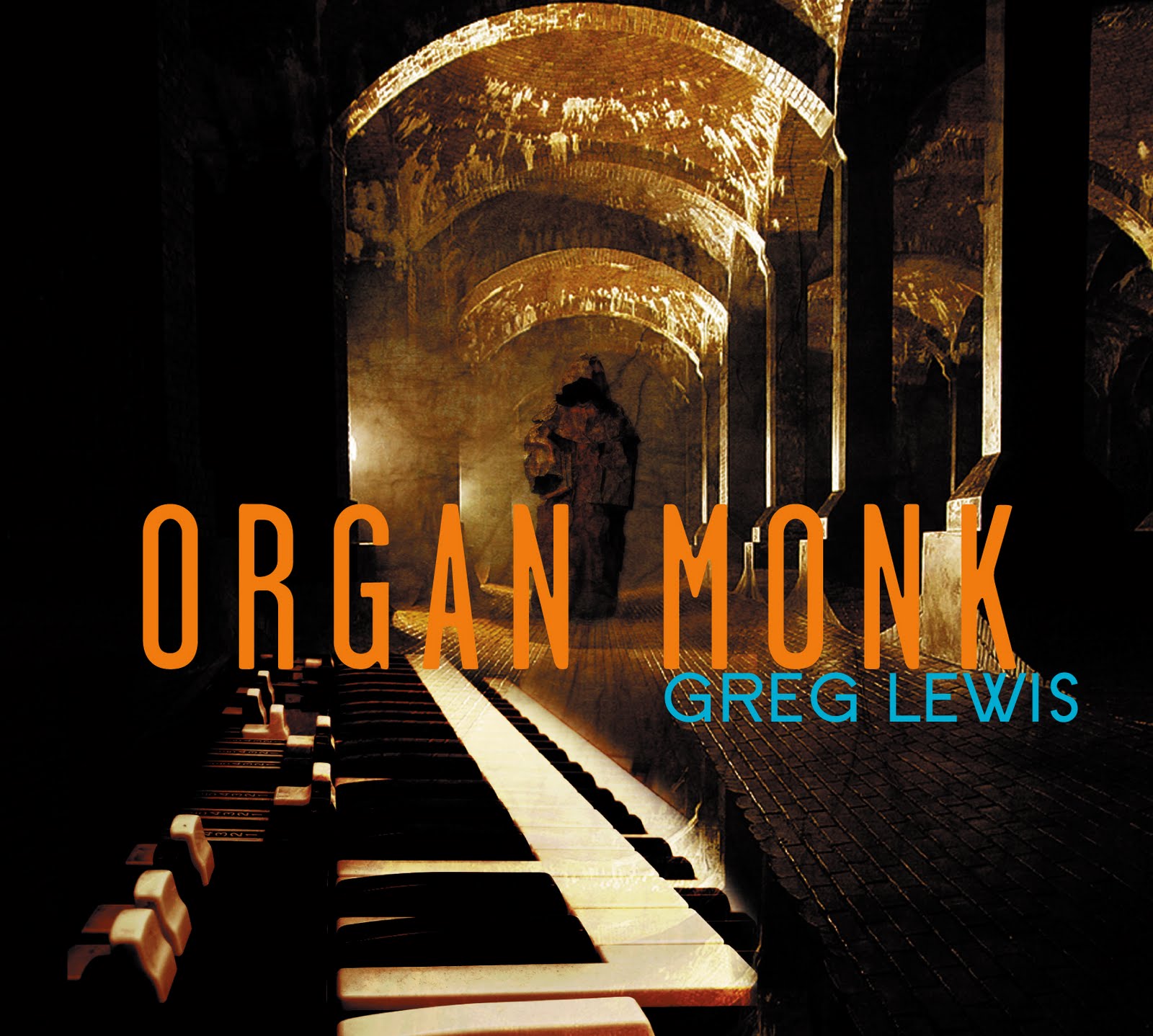
This current post is based on a freewheeling interview with Greg Lewis, one of the most creative jazz organists you’ll ever hear, with a sound all his own. Another one of his passions is the music of Thelonious Monk. A natural result of all this is Greg’s unique and entertaining recent CD, Organ Monk.


Over lunch at a diner in Greenwich Village, we discussed memories of hearing jazz, high school sports, and how Monk influenced him:


I think in a way jazz chose me. Mom said I heard music when I was in her stomach. My grandfather and dad both played piano. Dad would play jazz albums and then try to play the music on the piano. I started on the piano first when I was young. Another of my earliest memories was hearing Coltrane. He was the first musician I ever knew. He was constantly played by my father when I was about 6 or 7, though I thought it was crazy music!

In high school, I played sports and played tuba in the high school band. In sports, I was MVP in football and City champ in wrestling, 190 weight class. They wanted me to go to the Olympics for wrestling, but I liked football better. Also got the JFK Fitness Award and was named Athlete of the Year.

Around 16 or 17, I started liking Monk. I really liked the dissonance. It made him distinct, hearing those funny sounds. My piano chops weren’t good in high school, because all I played was Monk and some r&b. I had a regimen of practicing the piano and figuring how to play tunes by ear.

Everyone expected me to go to college for sports. When I got a full music scholarship for Queensboro Community College, it was just for piano. Eventually went on to The New School for piano studies. I still was always into playing Monk. Even when Roy Hargrove came to the school, he asked, “where’d you learn all that Monk?” I still see him on gigs, ‘cause he plays with Leslie Harrison.

I studied with Jaki Byard, then took lessons with Gil Coggins. When I was sent to sub for an organ gig playing left-hand, I went “what?” Then I started checking all kinds of organ cats.

After a while the conversation turned to discussion of everything organ, including the legends of the music and Hammonds:

Basically I was trying to figure out the organ by listening to those people like Larry Young, who was one of my favorites. Larry Young’s stuff really struck me because first of all you listen to Larry Young, Jimmy Smith, Jack McDuff, Charles Earland—I was even checking out Rhoda Scott. And the list goes on and on. If they were an organ player I was trying to check them out, even to the point where I was checking Chester Thompson and Sly of course. But the one thing that really took to me with Larry Young was that he recorded Monk’s Dream. He was the only one I know of that recorded Monk’s Dream, so when I heard just him and Elvin Jones playing a duet that really made me say, “oh, wait a minute.” And so that’s when, I think, the love came in and I started to obsess over organ. I would play a piano as though I was playing the organ.

One thing I like about the organ. It has so many different sounds, and that’s what’s also intriguing, especially, you know, being a product of the synthesizer era, really the pipe organ was the first synthesizer—really fused sounds, when you think about it. So, I always liked crazy sounds—highs, lows, clicks, cracks. And in some weird way, I think organ is perfect for Monk because, Monk was getting more in-between sounds on the piano. A lot of people say he played in the cracks.

With a pipe organ, you can’t sustain the bass quick enough. The bass is long, so when you play a Hammond, the notes are quicker which is what you need. Cause that stuff that Fats Waller did [on the pipe organ] sounds cool, but it’s weird. But I think that’s the main problem why it sounds weird, because the bassline couldn’t connect quick enough, especially whether it be stride or whether it be walking the bassline, you know the way Jimmy Smith and them did.

I had a Farfisa—that’s one of the first organs I got. I saw it online and got it cheap. That really didn’t do the job, you know. Nothing really works like the Hammond. Lawrence Hammond came up with something special when he made that Hammond organ. No other organ works for the jazz idiom as well.

I believe they sold Hammond to Australia first and then Japan bought it from the company in Australia. But I think it was in the 70s the last Hammonds were made. But they stopped making the Hammond. It was electronic with some tubes and it was kind of cheesy. The B3 and the C3 and the A100 and the RT3 or the 4 are the Hammond organs that work great for jazz because electronically they’re identical. The RT3 has an extra octave on the bass pedals, concave like a pipe organ and the C3 is enclosed so you can’t see the person’s feet, ‘cause the women didn’t want their ankles to be seen—that’s the only reason they made it. They made this in the 50s, so you know back then... And the B3 is the four-legged one that everyone knows and the A100 had its own speakers. The first Hammond that I actually bought was an A100. It had its own speakers, but electronically they’re identical—B3, C3, A100 and RT3. But those are the main ones. The other ones--you can take them or leave them. They’re missing something—they’re missing the bass or they’re missing the highs.

Then we moved on to why Greg eventually focused on jazz rather than r&b:


I was playing Prince tunes and Funkadelic tunes in my teens. But for some reason, somewhere in the late teens I really wanted to be able to play like Monk. So it was back to Monk. If I could say anything, I’d say Monk kept me interested in jazz. And that’s what kept me focused or really changed my mind.


To see an example of Greg in action, click here.

For even more information on Greg Lewis, his music and where you can hear him live, check out his site at http://www.greglewismusic.com/.

(A slight update to my original post: Greg Lewis has recently released a second recording of music from his Organ Monk project. It's a self-produced cd called Uwo in the Black.)

Friday, November 5, 2010

Important Gig for Mark Murphy

The extraordinary Mark Murphy, who has been the subject of a few other blogposts, is currently in Montreal, Canada, for a two-night gig on Friday, November 5 and Saturday, November 6. His pianist is the equally amazing Misha Piatigorsky, who has himself been represented on this blog. Here's the pertinent information:

Upstairs Jazz Club,
1254 MacKay
Montreal, Qc, H3G 2H4

Tel: 514.931.6808

http://www.upstairsjazz.com

If you're in the neighborhood, go out and support this jazz vocal legend. Yes, folks, he is still very much on the scene and still one of the most creative and exciting performers of any age you will ever encounter at a live gig.

Monday, August 9, 2010

The Two Questions: Late Summer Edition


Russian-born Misha Tsiganov is one of the most in-demand pianists on the scene today. He was born into a family of artists, so it's no wonder that he was drawn in such a creative direction. As well as performing straight-ahead jazz, he has been involved in bands which play Brazilian Samba, Latin Jazz and Salsa. Among the many musical legends he has performed with are Joe Chambers, Gary Bartz, Claudio Roditi, Johnny Colon and Chico Freeman. Furthermore, Misha has television credits, as the featured pianist on the CBS-TV children's show, "Little Bill."

Misha kindly agreed to be my latest subject for the "two questions" interview, and his responses follow directly below.


1. Why did you decide on a career in music?

It wasn't my choice to study music. When I was 6 years old my parents brought me to music school in St. Petersburg. Many years later I understood how music is important to me and realized that music is my passion. I decided to be a jazz musician not for career reasons. I never asked myself: Where I want to make my career happen, in jazz, in math, in sports etc... Back when I never really thought about a career, I just fell in love with jazz, I wanted to play jazz every day, I got addicted to jazz and finally realized that I can't live without jazz.


2. What is it you love about jazz that made you decide to focus on that type of music?

I studied classical piano for many years and I really love classical music. However, when I played classical music in public, I always felt that I'm not telling people my story. I felt like I'm telling people Mozart's story, or Chopin's or Rachmaninoff's story. They wrote tons of beautiful music and I love it, but this is their story, and I wanted to tell people my story. Some people express themselves through painting, writing, sculpting etc. I can express myself through playing jazz. For me, jazz is the freedom.


For more detailed information about Misha Tsiganov and his music, go to http://mishajazz.com/ or his My Space page.

Lastly, Misha has released a great CD, "Always Going West." It includes his original compositions, and his bandmates on it are trumpeter Alex Sipiagin, bassist Boris Kozlov, drummer Gene Jackson and percussionist Samuel Torres. You can find out more about this recording by going to https://store.cdbaby.com/cd/tsiganov.

Tuesday, April 20, 2010

The Two Questions: Springtime Edition


Ari Hoenig is considered to be one of the most innovative jazz drummers of his generation. He is equally at home leading his own bands, as a sideman in other people's bands, and doing solo gigs. In spite of being so in demand, Ari agreed to be the latest performer to answer the two questions.


1) Why did you decide on a career in music?

In 11th grade there was this thing called career day. Everyone was pushed to make decisions about what they wanted to do as a profession. I decided that day to be a professional drummer. At least that would be my 1st choice. I also had some backup plans. It was a pretty obvious decision since my parents are both musicians so they both supported me, and I had been playing music for about 10 years already at that point.


2) What is it you love about jazz that made you decide to focus on that type of music?

I used to play classical music quite a lot as a kid. I remember being nervous before I played, afraid that I would make a mistake. I didn't like the many many bars of rests I had to count before playing one big bass drum note or cymbal crash.

With jazz, I didn't get nervous. I learned to make my mistakes into something musical, and I could create something different each time relating to how I was feeling or what I was thinking about at the time. Improvising by ear was always natural for me so I was drawn to that aspect of jazz.


To get a better idea of what an amazing musician Ari Hoenig is in live performance, click here for a video of him in action. Also be sure to check out his site: www.arihoenig.com.

Sunday, April 11, 2010

Carol Sudhalter: The Octave Tunes


Carol Sudhalter has always been a bit of a Renaissance woman: playing and leading groups from duo to big band, collaborating with band mates from the U.S. and Italy, gigging overseas as well as at her home base in NY, being a multi-reeds player who doubles on flute, putting her own unique spin on familiar standards, and writing and performing original compositions.

Carol’s latest CD, Carol Sudhalter: The Octave Tunes, reflects the eclectic nature of her music. The title refers to the fact that each song has its own special opening leap. I’ve included my observations on a few of the tracks.

The first cut, “Flamingo,” given an Afro-Cuban treatment, features Carol’s ethereal but hard-driving flute, along with the exquisite piano of her young Italian protégé, Carlo M. Barile. On “Pancake Blues,” written by another fine Italian musician, Vido Di Modugno, who swings on organ, Carol showcases her earthy, old-school tenor. A soulful and moving vocal by Marti Mobin is the focus on “You Go to My Head,” where Carol contributes strong support with the interweaving lines of her bari, and her low-pitched notes cut straight to the heart.

It’s back to flute for “Alice in Wonderland,” along with Carlo on piano again. The sensitive interplay and soloing of the two instruments accentuates the wistful nature of the Disney song. In “Nature Boy,” Antonio Cervellino plays purring arco bass, and this time the pianist is the compelling Joe Vincent Tranchina. Carol contributes a heartbreaking flute solo before a return to the basic combination of arco and piano, with the occasional addition of flute accents. Another wonderful singer, Elena Camerin, is showcased with her romantic vocal to the beautiful Argentinian song, “Quisiera Ser.” Vito Di Modugno’s powerful organ is front and center for a moving reading of Billy Strayhorn’s “Daydream.”

To end the CD (and make it truly one for “all seasons”), are festive but off-the-beaten-track renditions of the Holiday Season standards, “Let It Snow! Let It Snow! Let It Snow!” and “The Christmas Song.”

These are just a few of the musical delights listeners can find on Carol Sudhalter: The Octave Tunes. There is no other recording, jazz or otherwise, quite like it. Carol Sudhalter and her fellow artists have managed to achieve fresh ways of performing familiar standards, as well as originals, and make this CD an enjoyable and fascinating listening experience from beginning to end.

For further information about Carol Sudhalter: The Octave Tunes click on this link. You can also learn about Carol Sudhalter's other recordings and gigs by going here.

An interview with Carol can also be found in my blogpost of Friday, July 24, 2009 ("And More Answers to the Two Questions.")