Sunday, August 9, 2009

Mark Murphy at the Kitano in NYC


On July 31 and August 1 Mark Murphy had a gig which proved why the legendary vocalist's club appearances are still such exciting events. Although he is now 77 years old, his voice is still strong and surprisingly flexible, his phrasing, scatting and sense of swing are impeccable, and his sense of drama is masterful. The singer was accompanied by some of the finest musicians around today: Vinny Valentino on guitar, Jon Cowherd on piano, Boris Koslov on bass, and Willard Dyson on drums. (Personal note: when Mark sang "My One and Only Love," his performance was so profound it moved me to tears.)

The Kitano was sold out for two nights and a majority of the audience members were other singers, including ones who had participated in workshops which Mark conducted over the years. The love for the great legend was palpable and there seemed to be a long line of admirers who wanted to convey their good wishes during breaks. Everyone agreed that we had all witnessed a true musical miracle in the fact that Mark had managed to make his performance during all four sets even more moving than any of us had expected. A perfect example of a true jazz singer who doesn't let age stand in the way of continuing to develop as an expressive and powerful artist.

To see videos from the gig, click on this link, which will take you to a You Tube channel featuring videos by various artists. Go to "see all" at the right of the page, and a brief search will lead you to performances by Mark Murphy at the Kitano.

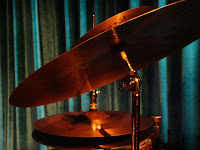
(Photo courtesy of The Jazz Paisan)


Special Note: For a discussion of Mark Murphy's entire career, go to my post from May 17, 2009, "The Fearless Singer."

Friday, July 24, 2009

And Still More Answers to the Two Questions


The latest responder to my two questions is yet another talented Astoria neighbor, Carol Sudhalter. Besides having great chops on baritone sax, tenor sax and flute, she is the leader of groups which include the Astoria Big Band and the Astoria Jazz Band. With these ensembles she has showcased the music of Women Composers of Queens such as Emme Kemp, Sarah Mclawler and Julie Mandel in a series of concerts supported by grants awarded to her and her band from local and city-wide arts organizations including the Department of Cultural Affairs. Thanks to another grant, Carol's band also presented a Jazz History of Queens, which was narrated by Leonard Gaskin. Furthermore, she has presented several fine Italian jazz performers in the U.S., some of whom are currently working in New York.

Now on to my questions and Carol's answers:


1) Why did you decide on a career in music?


I had NO intention of going into music. My family were all jazz musicians and I think I didn't want to be in their shadow. I loved jazz and followed jazz bands around a lot and had little flings with musicians. But in college I was a biology major with intentions of having a career in science writing. As a kid, I was a birdwatcher and insect collector. The music in my house was Chicago style jazz: Bix, Frankie Trambauer, Bud Freeman etc. Later, in college, I linked into Django, Billie Holiday, Louis Armstrong. My tastes and exposure were not 'modern'. Even bebop came much later.

When I was between my junior and senior years of college, I had an emotional meltdown and began the long and painful road of psychotherapy. There, I discovered my center, and 6 months later, realized that what I wanted to do was PLAY music rather than follow bands around. I borrowed a flute from a classmate and started picking out the notes and playing along with records as I had always seen my brother and my father do. Soon I was sitting in with local bands. Like everyone else, I had been bitten by the bug, and it was straight downhill all the way, from there! A wonderful, rewarding, creative life with no material gain to show for it. I took up sax much later: first tenor, then bari and alto.

2) What is it you love about jazz that made you decide to focus on that type of music?

Jazz is what I heard at home since I was born. I studied classical piano and sang in glee club in both high school and college, and studied classical flute for 15 years, but always felt that being able to hear lines of improvisation in my head was something that not everyone had, and that if one had to choose, it was best to focus on that special ability. I try not to compare myself with others...Just try to bring out the ideas that are inherent in me, unique to me. I love playing classical flute when I get a chance! In another life maybe I'll do more of that.

I'm excited about my new CD to be released between September and December, recorded with several of my most highly esteemed Italian artists including a very savvy and accomplished 19-year-old pianist from Bari, Carlo Barile; and several New York artists from both U.S. and Japan, such as pianist Joe Vincent Tranchina and woman drummer Kaori Yamada.

The most exciting thing about this project was discovering a studio right here in Astoria with a brilliant engineer who handled the whole thing. It is at 30-80 33rd St. -- walking distance from my house -- the engineer, Slau, handled the whole thing, with kid gloves, lots of TLC, amazing ears and incredible professionalism. I recommend him to anyone. BeSharp Studios, 718-932-3660.


To see an example of Carol in action, click on this link.

Tuesday, June 30, 2009

More Answers to the Two Questions


This post features responses to my two questions from yet another fine jazz artist, vocalist Giacomo Gates. Rather than elaborate further, I'll just let him do the talking:

The first question: Why did you decide on a career in music?


I didn't wake up one day and decide to become "a jazz singer."
I had been involved with music as a kid, singing a song at the age of six, in front of a class of tap dancers.... 'cause I didn't want to dance.... I chose to sing!

I took guitar lessons from the age of eight to fourteen or fifteen, and played into my twenties. I played and sang "for fun".... self enjoyment...did gigs here and there, but never "chased it."

I got into the construction business and traveled around the U.S. going wherever the big jobs were....Alaska, Washington State, Arizona, Louisiana. I was reintroduced to the music, while attending a two week workshop at the Fairbanks Summer Arts Festival 1987. Headliners were Steve Allen and Sarah Vaughn.

I was encouraged by several of the instructors and also felt it was time for a change. Having been a fan of the music since 10-12 years of age, it just felt like it was time. I always enjoyed playing, singing, learning, and performing this music...Great American Songbook and the music that was then called Modern Jazz.

I moved back to the East Coast and began to sing locally, regionally, clubs, festivals, wherever I could. I actually just took another route for a while, and got an education that money can't buy, nor would I trade it for anything."

The second question: What is it you love about jazz that made you decide to focus on that type of music?

There's another kind of music? Norman Mapp wrote it, Betty Carter and Joe Lee Wilson sang it.... "Jazz Ain't Nuthin But Soul"


To get a virtual experience of Giacomo doing his thing (although this only hints at what a fine performer he is live), click here.

To learn more about the world of Giacomo Gates, go to www.giacomogates.com.

Thursday, June 18, 2009

Two Questions (and Some Answers)


I recently sent an e-mail to various jazz artists who are good acquaintances and asked them two questions: 1) Why did you decide on a career in music? (2) What is it you love about jazz that made you decide to focus on that type of music (although I do realize that many of you also play other styles, like World and Classical. btw--I am including Brazilian under the heading Jazz. Or do those of you who play sambas, bossa nova and choros feel it should be a separate category?)

Periodically, I'll be posting the answers I've received from those who have responded. My first subject is a fine bassist who is currently my Astoria neighbor, Thomson Kneeland. His answers follow below:


1) I've played music and loved it since I was a kid, so it was quite natural for me to always be involved in the art form on some instrument or other. Since my music teachers painted a bleak picture of being a performing musician and "making it", I originally went to school for engineering and physics for a year and a half. I was always dedicated to creative music in whatever form, and I didn't want to become a music teacher, so music school didn't seem to be the answer. On top of that, my first acoustic bass was a high school graduation present from my father, so I didn't even start playing my "career" instrument until after high school. Well a year later, I was making a meager living performing jazz; since I already had some prerequisite knowledge, I just needed to learn my instrument and grow. I saw it could be done, dropped out of school at 18 and took it from there.

2) All in all, I consider myself a musician who specializes in "improvisation", with a focus on jazz. I do mainly find myself on jazz gigs these days, but also have done a lot of crossover with Balkan stuff, Indian music, as well as classical chamber music. I had my hands in many more styles in New England, but have been specializing more in the "jazz" realm for the past few years, simply out of the contexts I've found myself in. But I find that simply saying "I'm a jazz musician" pigeonholes me, because people are so categorical in terms of thought. So when the average person asks, I stick to something like "improvised based music with an emphasis on jazz".

For me, jazz and improvisation provide a freedom of choice that no other music does (and it therefore also requires an enormous responsibility to use that freedom wisely). I liken it to Hermann Hesse's "The Glass Bead Game", for anyone in the literary realm. A high artistic expression fusing visceral groove, emotion, mathematics, athletics/body movement/coordination, and freedom of choice...all taking place in real time. More than anything else, it's the fusion of these things...playing your ass off (and listening to a group that does) is an uplifting experience. And that can be combined with any level of intellectual sophistication one wants. For me, it's the highest artistic expression that I can think of. And for me, it's the biggest challenge I've ever faced in terms of a discipline. Becoming a great musician requires complete mastery on so many levels: mental, physical, emotional, and psychological.

Other art forms utilize various elements I've mentioned, but music encompasses more than many, and in real time. Perhaps the closest comparison would be improvisational dance. Or improvisational theater, utilizing language instead of sound....but I think the latter is pretty rare. I'm very curious about the Asian Noh Theater and other traditional forms that have combinations of all these things in real time with musical accompaniment, but I havent had the time or opportunity to learn. Which is not to denigrate any art form or set music/jazz above it, but I can't think of any other discipline that requires so many facets to be mastered intellectually, physically, and more. If anyone has any other thoughts on this, I'd love a perspective!
And finally, regarding jazz...I just love the music, as is, and from an historical perspective! That's the main thing when it comes down it...the spirit of the music, whether swing from the 50's and 60's, fusion, or modern chamber jazz without any hint of "swing" context. No rhyme or reason about it, it just kicks ass!


There are quite a few excellent examples of Thomson's playing on You Tube. Click here to see him perform "Solar."

For more information about him, go to www.thomsonkneeland.com.

Friday, June 5, 2009

A special post about Kenton


Stan Kenton--there is no middle ground for this bandleader. Jazz aficionados either love his music and consider it constantly innovative or else find it bombastic and excessive. Have to admit, I'm definitely in the former camp, although I admit there are cringe-worthy performances such as the draggy version of "September Song," which includes a vocal by the band which frankly, sounds as though they were lobotomized and forced with cattle prods to sing it. On the other hand, fine sidemen like Shelly Manne, Stan Getz, Art Pepper, Lee Konitz and Zoot Sims were among Kenton's personnel at certain points in their careers. Furthermore, Pete Rugolo, Shorty Rogers, Bill Russo, Bill Holman, Johnny Richards, Chico O'Farrill and Lennie Niehaus contributed exciting, hip arrangements that kept the sound of the orchestra fresh and forward-reaching, and don't forget that Anita O'Day, June Christy and Chris Connor were among Stan Kenton's vocalists. Guess the rule of thumb for listening to Kenton is this: with a few exceptions, try to avoid tracks which feature Kenton's piano-playing and charts and focus on most of those involving the musicians and/or arrangers noted above. Also, my own favorite period of the Kenton band's long history was the 1950s, when the influence of that decade's jazz innovations could often be heard in the contributions of the younger guys who had come onboard.

I realize I'm breaking my own rule by including a link to a Soundie of "Tampico" from the 1940s, but there don't seem to be any good examples of Kenton's 1950s orchestra at You Tube. Anyway, I've always loved this particular song, and it's great to see June Christy singing during her prime. Click here to check it out for yourself.

Monday, June 1, 2009

Monk Lives


This is one of those weeks when I've been having trouble deciding on a topic for my latest post. As I'm typing this, Thelonious Monk is playing "Think of One" on Music Choice. Monk--one of those artists who can take a listener feeling dragged to the ground and lift them up with just a few notes of his audacious but endearing playing which sounds like nobody else's. He could do an entire album of Duke Ellington songs and play them in a way that made them seem more Monkish than Dukish. Then there are his original songs infused so deeply with his unique personality that no matter who plays them, Monk is always there in spirit.

Monk's music has remained such a vital part of the jazz landscape that even Sun Ra, former citizen of ancient Egypt who migrated to Saturn before visiting earth, had his own turn at "Round Midnight" with a female vocalist singing the lyrics. Bill Evans performed "Blue Monk" and "Round Midnight," utilizing overdubs, on his album, "Conversations with Myself." More recently, I've heard new spins on Thelonious' songs by such younger pianists as Misha Piatigorsky and George Colligan. Definitely not slavish imitations of the Monk sound, but reflecting the musical visions of each of these artists while still maintaining respect for the original compositions. I think Monk himself would certainly approve.

It's always an incredible experience to watch Thelonious Monk performing. Click here to see a video of him doing just that, with Charlie Rouse on sax, Frankie Dunlop on drums and Butch Warren on bass. The song is Evidence, in a film recorded in Japan during 1963.

Monday, May 25, 2009

Jazz Styles


A friend suggested that I devote one of my posts to definitions of various jazz styles. Actually, no definition in words could fully give a true impression of what each style sounds like, plus sometimes the styles may dovetail to create a kind of jazz hybrid. Also, there are many jazz performers who made important recordings in several styles. At any rate, I'll attempt to give brief descriptions of many of the different types and at the end of each section, I'll have links so you can hear (and in most cases see) performances which illustrate them.

New Orleans or Dixieland originated, logically, in African-American communities of New Orleans and combined elements of African and European music. King Oliver, Sidney Bechet and Jelly Roll Morton are among those who performed in this style, but probably the best known performer was Louis Armstrong. For a film of the trumpeter in his prime click here.

Swing, which is generally performed by big bands, had its heyday from the 1930s through the 1940s. It incorporates a brass section made up of trumpets and trombones, a reed section made up of saxophones and clarinets, and a rhythm section made up of piano, bass and drums. Sometimes there is also a guitar or violin. Vocalists are also often utilized. This type of jazz is known for its swinging or flowing rhythm, as well as brisk tempos. However, slower tempos may also be used, in the case of ballads. Generally, swing has been popular with dancers and led to the creation of the lindy and fox trot, among other dance styles. Some of the bands which were popular have included Duke Ellington, Count Basie, Glenn Miller, Woody Herman and Benny Goodman. Since it is currently Benny Goodman's Centennial, it seems appropriate to include a performance by his orchestra. To watch it, click here.


Bebop tends to be more soloist-driven than swing, and stresses virtuosity in playing and harmonic improvisation. Among the best-known proponents of this style are Charlie Parker, Dizzy Gillespie and Thelonious Monk. A video example featuring Parker and Gillespie can be seen by clicking here.

Hard Bop is a harder-edged extension of bebop, incorporating r&b, gospel and the blues (although the latter could to a certain extent be sometimes found in Bebop as well). Miles Davis, John Coltrane and Art Blakey are among those who made major recordings utilizing this style. For a video of Art Blakey's Jazz Messengers click here.

Often the term "Funk Jazz" is used similarly to the term "Hard Bop," but the one musician who generally comes to mind as one of its innovators is Horace Silver. A fine example of his playing can be seen here.

Cool is generally perceived as more relaxed and less aggressive than Bebop, and superficially seems like a more-refined style of jazz. Stan Getz, Lee Konitz, Warne Marsh and Miles Davis, often with Gil Evans, are often identified with this style. To see a video of Miles with Gil, click here.

West Coast, which refers to the jazz played in California, actually includes many types of jazz, but is usually thought of as part of the Cool Jazz movement. Gerry Mulligan, Chet Baker, Dave Brubeck, Shorty Rogers and Bud Shank are among the major musicians associated with this music. For a video of Shorty Rogers click here.

Free is an attempt to go beyond the conventions of jazz in melodies, tempos and chords. As this style was developed it tended to go further and further into abandonment of set structures. Ornette Coleman, Don Cherry, Cecil Taylor, Sun Ra and late-career John Coltrane are among the ones who pushed the music to the limits. You can see Cecil Taylor playing solo piano by clicking here.

Third Stream, an amalgam of classical music and jazz, is often associated with the composer Gunther Schuller. To hear an example of a piece by the reed player Jimmy Giuffre as performed by Gunther Schuller's Orchestra, go here.


Fusion is yet another merger of jazz improvisation with other musical forms, in this case rock, funk and r&b. It generally incorporates the use of electric guitars, basses and keyboards. Miles Davis, Chick Corea, Weather Report, John McLaughlin and Herbie Hancock have been major performers of this style. Click on here to watch a prime example of "electric" Herbie.


A detailed discussion of the various genres and sub-genres of jazz could go on for many posts, but I hope that this very brief overview will give you a good idea of the many developments which have taken place throughout its history.

(Photo courtesy of The Jazz Paisan)